For many brands, starting an outerwear production project can feel complex, especially when working with an OEM manufacturer for the first time. Questions around sampling, timelines, materials, and communication often come up early in the process. This guide breaks down how a typical jacket production journey works from initial idea or tech pack through to final delivery, so you know what to expect at each stage. Whether you’re launching a new collection or scaling an existing line, understanding the process helps you make better decisions, avoid delays, and build a stronger partnership with your manufacturer.
Where Every Project Begins: Your Idea or Tech Pack
Every project starts with a clear concept.
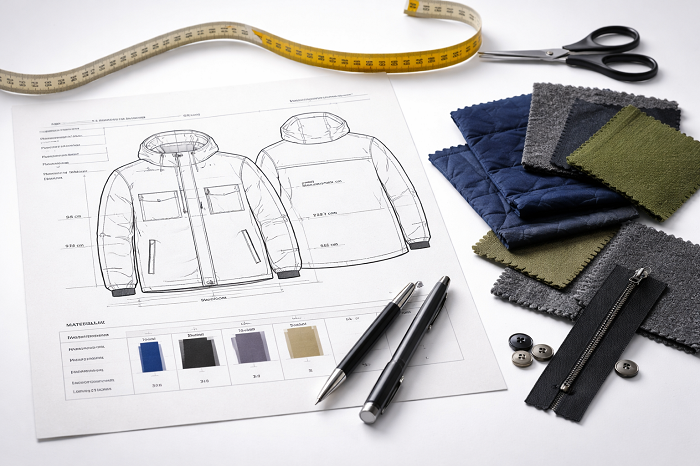
For some brands, this comes in the form of a detailed tech pack, outlining measurements, materials, trims, and construction details. For others, it may begin with reference images, sketches, or even just an idea of the style and function they want to achieve. A tech pack (technical package) is essentially a blueprint for your garment. It includes the key details a manufacturer needs to produce your design accurately, helping ensure consistency, clear communication, and fewer errors during production. Not every brand starts with a fully developed tech pack, and that’s completely normal. Many emerging brands begin with a concept, reference images, or a rough idea of the product they want to create. In these cases, working with an experienced outerwear manufacturer can be especially valuable. A knowledgeable partner can help translate your idea into a workable design, advising on materials, construction, and fit, even if you don’t have technical design experience. At this stage, precision in communication is critical. A detailed tech pack establishes the framework for production, with the sampling process providing an opportunity to refine and perfect the final garment. Early conversations help identify missing details, potential challenges, and opportunities to improve both performance and cost efficiency before development begins.
Material & Trim Sourcing: Turning Ideas Into Reality
Once the concept is clear, the next step is sourcing the right materials.
This includes:
● Outer fabrics (e.g. recycled polyester, nylon, technical shells)
● Insulation (down, recycled padding, performance fills)
● Trims (zippers, buttons, toggles, drawcords) Material selection isn’t just about aesthetics;
it directly impacts performance, price, and production timelines.
Experienced manufacturers will guide brands toward suitable options based on:
● End use (urban, outdoor, performance)
● Climate requirements
● Sustainability goals
● Target price point Working with trusted, certified suppliers also ensures materials
meet required standards for durability, safety, and environmental responsibility,
an important consideration for modern outerwear brands.
Sampling in Jacket Manufacturing: From Prototype to Pre-Production
Sampling is where your design becomes a physical product for the first time and often where important decisions are made.
This stage typically happens in phases:
1. Prototype Sample
The first version of your jacket, created based on your tech pack or concept.
Used to assess:
● Overall design and fit
● Construction
● Material suitability
2. Fit or Size Samples
Produced in multiple sizes to ensure grading and fit consistency across your range.
3. Pre-Production Sample (PPS)
The final version made using approved materials and trims.
This becomes the reference for bulk production.
Sampling is not just a checkpoint, it’s where refinement happens. Adjustments to fit, fabric, or finishing are common and expected.
Taking the time to get this stage right significantly reduces risk later in production.
Why Timing Matters in Outerwear Production In the outerwear industry, timing plays a critical role, especially for seasonal collections.
Many established brands begin development and sampling 9–18 months ahead of their intended launch season, allowing time for material sourcing, prototyping, refinements, and production planning. This longer timeline is particularly important for technical outerwear, where performance testing, fabric development, and multiple sample iterations may be required. For smaller or emerging brands, timelines are often more compressed, sometimes working within 3–6 months from concept to production. While this can be achievable, especially for simpler styles or smaller production runs, tighter timelines leave less room for sampling revisions, material sourcing flexibility, and production scheduling. This can increase pressure on both development and delivery. Understanding these differences helps brands plan more effectively, whether you’re working on a long-term seasonal strategy or bringing a product to market on a shorter timeline.
The Value of a Strong Manufacturing Partnership
Beyond timelines and processes, one of the most important aspects of outerwear production is the relationship between brand and manufacturer.
When you find the right partner, the process becomes more efficient over time. Communication is clearer, expectations are aligned, and decisions can be made with greater confidence.
As familiarity grows, manufacturers gain a deeper understanding of your brand’s standards, fit preferences, and design direction, helping to streamline development and reduce friction across future collections.
For many brands, this long-term collaboration becomes a key part of their success.
Over time, these working relationships often become more collaborative, with ongoing dialogue shaping each new collection. At Lime China, ongoing relationships with repeat clients are a central part of how projects are developed. From men’s outerwear collections to kids’ jacket production, the team works closely with brands across seasons, building a shared understanding that supports consistency, quality, and ongoing refinement. This continuity allows for more efficient sampling, smoother production, and a more collaborative approach to developing each new collection.
Costing & Order Confirmation
Once your sample is approved, your manufacturer will provide final pricing based on: ● Materials and trims ● Order quantity (MOQ) ● Construction complexity ● Packaging and logistics requirements For most OEM outerwear projects, minimum order quantities typically start around 100 units per style and colour, depending on material selection and production setup. At this stage, timelines are confirmed, and production planning begins.
Bulk Production: Scaling With Precision
With approvals in place, your jacket order moves into full-scale production.
This stage includes:
● Fabric cutting
● Stitching and assembly
● Technical processes (e.g. seam sealing, quilting, insulation filling)
Consistency is key. A reliable garment manufacturer will follow strict production standards to ensure every garment matches the approved sample.
Advanced techniques such as precision pattern making and specialized construction methods help maintain accuracy and performance across larger production runs.
Quality Control: Built Into Every Step
Quality control doesn’t happen at the end — it runs throughout the entire process.
Typical checkpoints include:
● Material inspection before production
● In-line checks during manufacturing
● Final inspection before packing This structured approach helps identify issues early, reducing delays and ensuring consistent jacket quality.
Many manufacturers also follow recognised inspection standards to maintain consistency at scale and meet client expectations.
Packaging & Logistics:
Preparing for Delivery Once production is complete and approved, garments move into packaging and shipping.
This stage includes:
● Folding and packing to brand specifications
● Labelling and documentation
● Freight coordination (air, sea, or rail) Clear communication at this stage is essential, particularly for brands working across international markets.
An experienced manufacturing partner will support logistics planning to ensure your jackets arrive on time and in the right condition.
Why Process Transparency Matters
Understanding the production process isn’t just helpfu,l it’s essential for building a successful brand.
Clear, transparent workflows allow you to:
● Plan collections more effectively
● Avoid costly mistakes
● Communicate confidently with your manufacturer
● Scale production with fewer risks It also builds trust.
When you know what’s happening at each stage from sampling to delivery you can move forward with confidence, knowing your product is being developed with care and expertise.
Final Thoughts: From First Concept to Long-Term Partnership
Outerwear production is more than a series of steps it’s a process built on communication, clarity, and collaboration.
From the first idea or tech pack through to final delivery, each stage plays a role in shaping the outcome of your jacket design. But beyond the technical process, it’s the working relationship between brand and manufacturer that often makes the biggest difference over time. When there is a shared understanding of your product, your standards, and your goals, the process becomes more efficient, more consistent, and ultimately more enjoyable to work through. Each new outerwear collection builds on the last, with greater confidence and fewer unknowns. Whether you’re developing your first jacket for production or refining an established outerwear line, taking the time to understand the process and finding the right partner to support it can set the foundation for long-term success. If you’re exploring outerwear production and want to better understand how your project might move from concept to finished product, having the right support early in the process can make a significant difference.